There has never been more noise about artificial intelligence in games. Depending on who you ask, AI is either about to generate entire worlds on demand or about to hollow out the craft of game design entirely. Both stories miss something important: AI has been inside game development since the very beginning. The interesting question is not whether games will use AI. It is what AI actually does well, what it does poorly, and where the human hand still matters.
As a small studio that builds logic puzzles, we think about this question constantly. So here is an honest tour - no hype, no doom.
The oldest trick in software
In 1980, Pac-Man shipped with four ghosts, and each one behaved differently. Blinky chased you directly. Pinky aimed for a spot ahead of you, cutting off your escape. The others wandered and ambushed in their own patterns. Players swore the ghosts had personalities, that they coordinated, that they hunted as a pack.
They did not. Each ghost followed a targeting rule a few lines long. But the experience of intelligence was real, and that is the founding insight of game AI: the goal was never to build a mind. The goal is to build the feeling of one, at the lowest possible cost. Most of what gets called AI in games - enemy behavior, pathfinding, companions that seem to anticipate you - is stagecraft in exactly this tradition, and it is honorable stagecraft. The illusion is the product.
Worlds from formulas
The second old tradition is procedural generation. Rogue, also from 1980, built a new dungeon every time you played. Elite, in 1984, packed eight galaxies of star systems into a home computer with memory measured in kilobytes, because the galaxies were not stored anywhere - they were computed, on demand, from a seed. Three decades later, No Man's Sky used the same principle to promise more than 18 quintillion planets.
Procedural generation is not machine learning. It is deterministic rules plus randomness, shaped by careful human constraints. But it established the idea that content can be grown rather than hand-placed, and every modern conversation about generative AI in games is really a continuation of this lineage - with one crucial lesson attached. Players of procedural games discovered the failure mode early: infinite content is easy, and infinite meaningful content is not. A million auto-generated dungeons are worth less than twenty designed ones if the million all feel the same.
The invisible director
Some of the best game AI never appears on screen. Left 4 Dead, in 2008, shipped with an AI Director that watched how stressed the players were - health, pacing, recent fights - and quietly adjusted what spawned next, manufacturing calm before storms. F.E.A.R., a few years earlier, gave its enemy soldiers a planning system so that they appeared to flank, cover, and coordinate, and players again perceived far more intelligence than existed.
The pattern to notice: in both cases the AI's job was dramaturgy, not competition. It shaped the experience rather than starring in it. That remains the most successful role AI plays in games - an invisible stage manager tuning tension, difficulty, and pacing to the person holding the controller.
Machines that play are not machines that make
Then there is the famous lineage: Deep Blue beating Kasparov in 1997, AlphaGo beating Lee Sedol in 2016, AlphaZero teaching itself chess, shogi, and Go in 2017, and agents reaching top-level play in StarCraft II and Dota 2 soon after. These systems are genuinely superhuman - at playing.
But playing and making are different acts. A system that can beat any human at Go cannot tell you whether a puzzle is fun. It optimizes for winning; a designer optimizes for the loser's experience - for the shape of the struggle, the fairness of the defeat, the pull to try again. Nothing in a win rate encodes that.
What did happen is subtler and more useful: game-playing AI became a design instrument. Studios now deploy automated agents as tireless playtesters - sweeping levels for exploits, estimating completion rates, predicting where real players will get stuck - before a human ever plays. That is a real, unglamorous revolution: not AI as author, but AI as the world's fastest QA department.
The new wave
The last few years added large language models and image generation to the toolkit, and the honest summary is that AI is eating the middle of production. Drafting hundreds of variations of incidental dialogue, as Ubisoft's Ghostwriter tool was built to do. Iterating concept art before an artist commits. Research projects like Stanford's 2023 generative agents - a small simulated town of characters with memories and plans, who organized a party without being scripted to - hint at NPCs that improvise rather than repeat.
Notice what all of these have in common: they generate candidates. Volume, variation, first drafts, stress tests. What none of them generate is judgment - the decision about which candidate is right, and why, and whether the whole is worth shipping.
What this means for logic puzzles
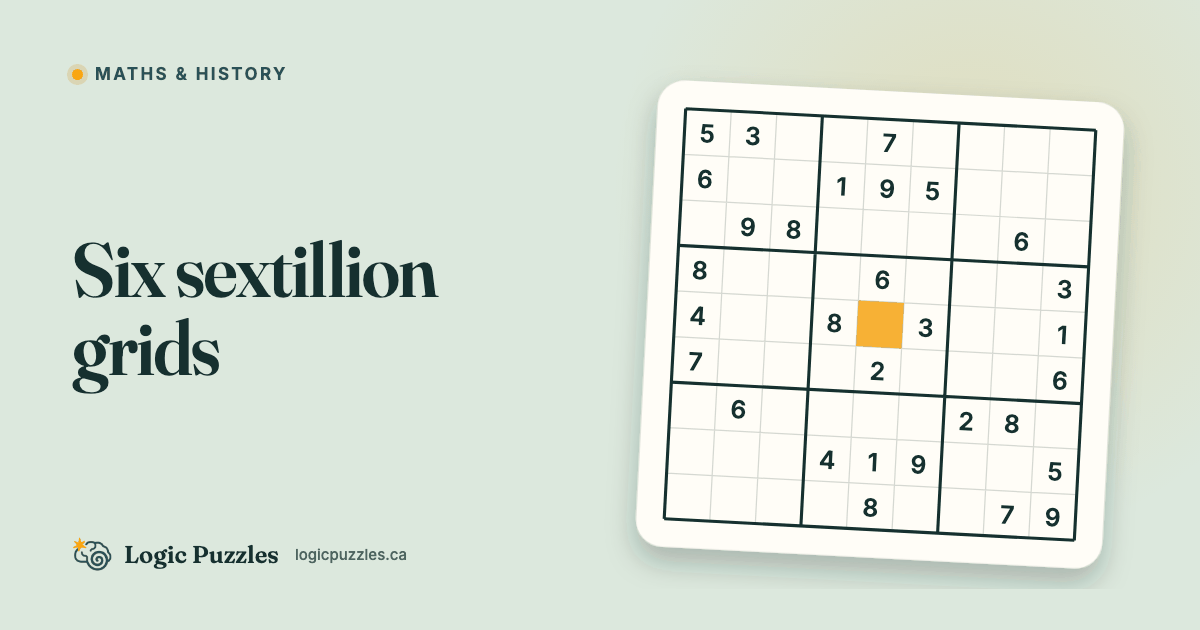
Puzzle games are the cleanest case study in all of this, because a puzzle has something most game content does not: a formal definition of correctness. A Sudoku either has exactly one solution or it does not. There is no vibes-based answer.
So the machine's role in our own work is precise. Generation is generate-and-test: propose a grid, then put a solver in the loop to verify - exhaustively - that exactly one solution exists and that a chain of pure deductions reaches it. Difficulty is not guessed; it is graded by which human techniques the solver needs to finish. A puzzle that yields to simple eliminations is easy no matter how empty it looks. One that demands layered implication chains is hard no matter how full. We have written before about how we ensure every puzzle has a unique solution, and the point bears repeating here: a computer cannot yet tell you whether a puzzle is beautiful, but it can prove whether a puzzle is fair - and fairness is the foundation beauty stands on.
What the machine still cannot tell you
Whether the solve feels good. Whether the bottleneck arrives too early, whether the breakthrough lands with drama or with a shrug, whether the rhythm from first scan to final cell has an arc. One Japanese puzzle publisher built a legendary reputation on hand-crafted puzzles for exactly this reason - human makers shape the story of a solve in ways raw generation does not.
That is the actual division of labor emerging in game development, and we think it is a healthy one. The machine brings correctness, scale, and tireless testing. The human brings taste - the accumulated, hard-to-articulate sense of what an experience should feel like. When you solve one of our grids tonight, both hands are present: verified by exhaustive logic, and chosen because it felt right.