Creating engaging and well-balanced levels for logic puzzle games is both an art and a science. Whether you're designing levels for Sudoku, Binary Sudoku, or other logic puzzles, these key considerations will help you craft experiences that challenge and delight players.
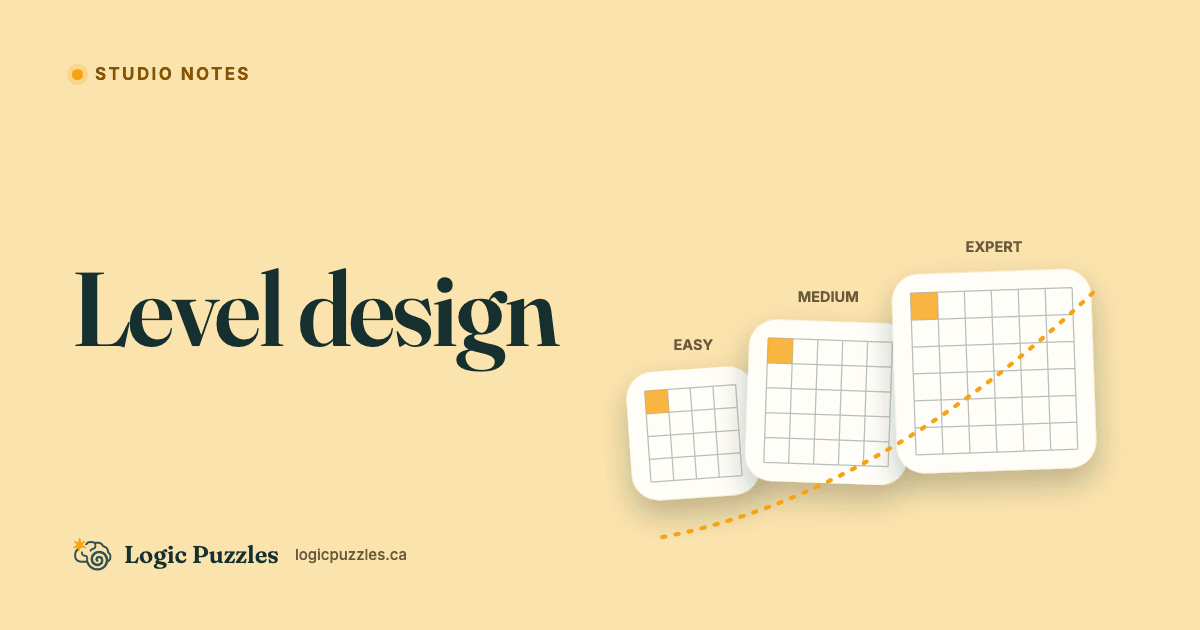
1. Progressive Difficulty Curve
A well-designed difficulty curve is crucial for player engagement and retention:
- Start with simple mechanics and gradually introduce complexity
- Ensure each level builds upon previously learned concepts
- Balance challenge with accessibility to prevent frustration
- Include occasional "break" levels to boost player confidence
2. Clear Learning Objectives
Each level should have a clear purpose in teaching or reinforcing specific skills:
- Introduce new mechanics one at a time
- Provide clear feedback when players use correct strategies
- Include tutorial elements that don't feel intrusive
- Allow players to experiment with different approaches
3. Multiple Solution Paths
While logic puzzles often have one correct solution, good level design allows for:
- Different strategies to reach the solution
- Multiple valid intermediate steps
- Creative problem-solving approaches
- Personal playstyle accommodation
4. Visual Clarity and Feedback
Clear visual design helps players understand the puzzle state:
- Use consistent visual language for game elements
- Provide immediate feedback for player actions
- Highlight important information and constraints
- Maintain clean, uncluttered layouts
5. Time and Resource Management
Consider how players will interact with the level:
- Balance puzzle size with expected completion time
- Provide appropriate hints or resources
- Consider mobile vs. desktop playtime expectations
- Allow for save states or progress tracking
6. Accessibility Considerations
Make your levels accessible to a wide range of players:
- Include colorblind-friendly design elements
- Provide alternative input methods
- Allow for text scaling and contrast adjustments
- Include difficulty options or assistive features
7. Testing and Iteration
Thorough testing is essential for quality level design:
- Test with players of different skill levels
- Identify and fix potential soft-locks
- Gather feedback on difficulty and clarity
- Iterate based on player behavior data
8. Theme and Narrative Integration
Make levels feel cohesive with the game's theme:
- Align puzzle mechanics with the game's story
- Use themed visual elements and terminology
- Create memorable level names and descriptions
- Maintain consistent world-building elements
9. Replayability and Mastery
Design levels that encourage repeated play:
- Include optional challenges or achievements
- Offer different difficulty ratings
- Provide speed-run or optimization opportunities
- Include collectibles or bonus objectives
10. Technical Considerations
Ensure levels work smoothly across different platforms:
- Optimize performance for mobile devices
- Ensure proper save/load functionality
- Test cross-platform compatibility
- Implement proper error handling
Conclusion
Creating great levels for logic puzzle games requires careful consideration of both technical and player experience aspects. By focusing on these key elements, you can create levels that challenge players while maintaining engagement and enjoyment. Remember that the best level design often comes from iterative testing and player feedback, so don't be afraid to refine and improve your levels over time.
Want to see these principles in action? Try our collection of logic puzzle games and experience carefully crafted levels that put these design principles into practice!